
When it comes to choosing the right tiles for your kitchen, the debate often boils down to porcelain versus ceramic. Both have their unique qualities, and understanding these can help you make the best choice for your home. Let’s explore the differences and benefits of each to see which might be the better option for your kitchen.
Porcelain vs Ceramic Kitchen Tiles
Porcelain and ceramic tiles are popular choices for kitchen flooring and walls, but they have distinct differences. Porcelain is denser and less porous than ceramic, making it more resistant to moisture. This quality makes porcelain a great choice for areas prone to spills and splashes, like kitchens. On the other hand, ceramic tiles are generally more affordable and come in a wide variety of designs, making them a versatile option for many homeowners.
Porcelain tiles are often preferred for their durability and strength. They can withstand heavy foot traffic and are less likely to chip or crack. Ceramic tiles, while not as tough as porcelain, are easier to cut and install, which can be an advantage during installation.
Porcelain Kitchen Tiles
Porcelain tiles are known for their strength and longevity. They are made from refined clay and fired at higher temperatures, which gives them their robust nature. This makes porcelain ideal for kitchen floors where durability is a priority. They are also resistant to stains and water, which means they require less maintenance over time.
One of the standout features of porcelain is its resistance to wear. This makes it perfect for busy kitchens where spills and stains are common. Porcelain tiles are also available in a variety of finishes, including matte, polished, and textured, allowing you to match them with your kitchen’s style.
Ceramic Kitchen Tiles
Ceramic tiles are a favorite for those looking for variety and affordability. They are made from a mixture of clay and other natural materials, then fired in a kiln. This process makes them slightly less dense than porcelain, but they are still a reliable choice for kitchen surfaces.
Ceramic tiles come in countless colors and patterns, offering more design flexibility. They are also easier to cut, which can simplify the installation process. While they may not be as water-resistant as porcelain, they are still a practical choice for kitchen walls and backsplashes where direct contact with water is less frequent.
Best Kitchen Tiles
Choosing the best tiles for your kitchen involves considering both aesthetics and functionality. Porcelain tiles are excellent for those who prioritize durability and low maintenance. They work well in high-traffic areas and are less likely to absorb moisture.
Ceramic tiles, with their wide range of styles, are perfect for creating a unique look. They are suitable for areas where heavy-duty wear and tear is not a concern. Both types can be used effectively depending on your specific needs and budget.
Kitchen Tile Comparison
When comparing kitchen tiles, it’s important to consider factors such as durability, cost, and style. Porcelain tiles generally cost more due to their durability and manufacturing process. However, their long lifespan can make them a cost-effective choice in the long run.
Ceramic tiles, while less expensive upfront, may require more frequent replacement or maintenance. The choice between porcelain and ceramic should also take into account the specific area of the kitchen you’re tiling and how much wear and tear it will endure.
Kitchen Flooring
For kitchen flooring, both porcelain and ceramic tiles are viable options. Porcelain’s resistance to moisture and wear makes it ideal for flooring. It can handle the demands of a busy kitchen environment, providing a long-lasting and stylish surface.
Ceramic tiles can also be used for flooring, especially in areas where you want to add a splash of color or pattern. They provide a comfortable surface underfoot and can be a more budget-friendly option.
Kitchen Splashback Tiles
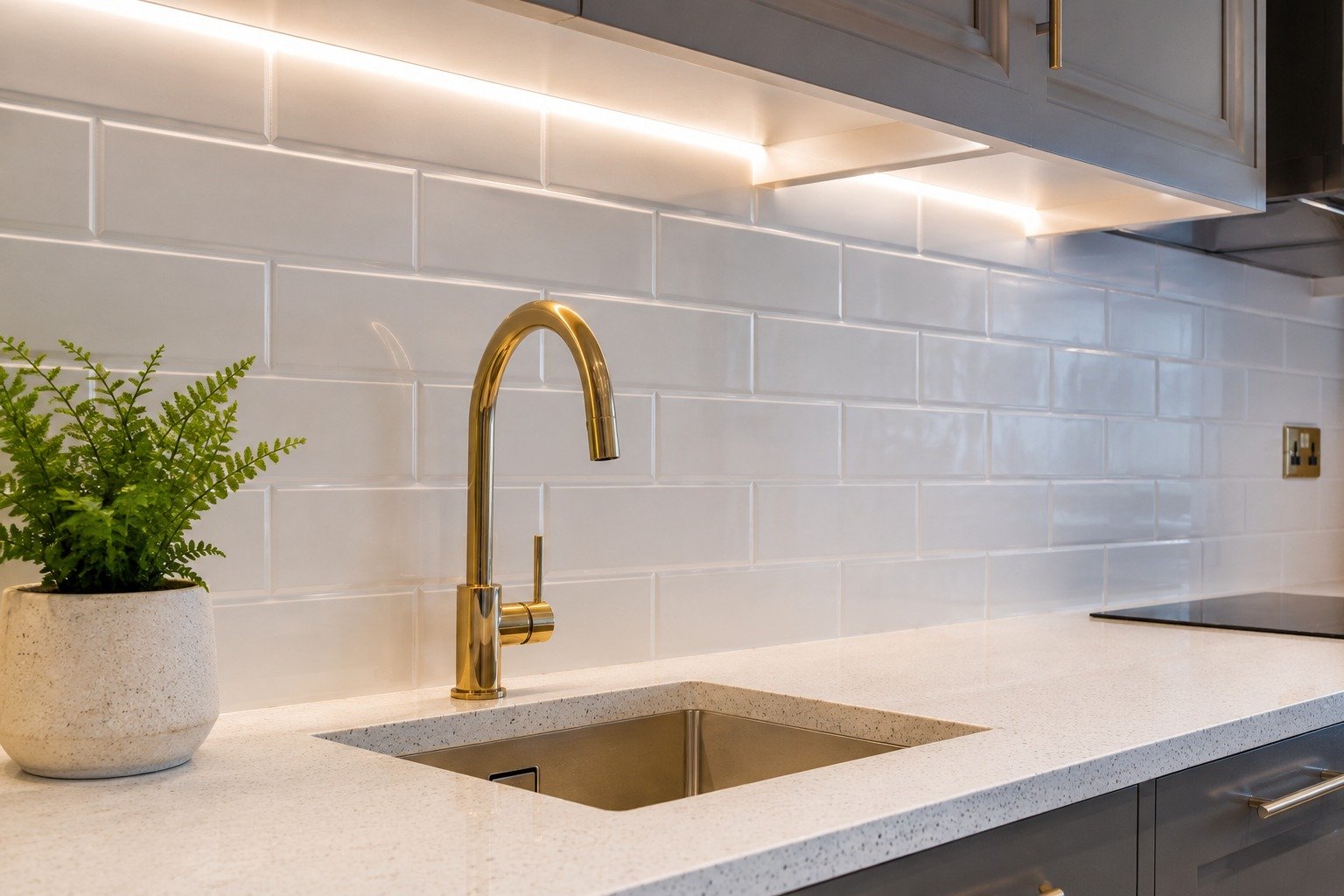
Splashbacks are a great opportunity to add personality to your kitchen. Both porcelain and ceramic tiles can be used for splashbacks, but ceramic is often preferred due to its wide range of designs and ease of installation. You can create intricate patterns or bold color statements with ceramic tiles, making your splashback a focal point.
Porcelain tiles can also be used for splashbacks, especially if you’re looking for a sleek, modern look. Their durability ensures that they will withstand the heat and moisture typical of kitchen environments.
Tile Buying Guide
When buying tiles for your kitchen, consider your lifestyle, budget, and design preferences. Porcelain tiles are an investment in durability and ease of maintenance. They are ideal for high-traffic areas and those who prefer a low-maintenance option.
Ceramic tiles offer more variety and are easier to work with during installation. They are perfect for those who want to play with design elements and are working with a tighter budget.
Consider the specific needs of your kitchen space. For example, if you’re tiling a floor that will see a lot of use, porcelain might be the better choice. For walls and splashbacks where style is a priority, ceramic could be more suitable.
Conclusion
Choosing between porcelain and ceramic kitchen tiles ultimately depends on your specific needs and preferences. Both have their strengths and can be used effectively in different areas of the kitchen. Porcelain offers unmatched durability and moisture resistance, making it ideal for floors and high-use areas. Ceramic provides more design flexibility and is easier on the wallet, perfect for creative splashbacks and walls.
By understanding the differences and benefits of each type, you can make an informed decision that suits your kitchen’s style and functionality. Whether you prioritize durability or design, there’s a tile out there that will meet your needs and enhance your kitchen space.